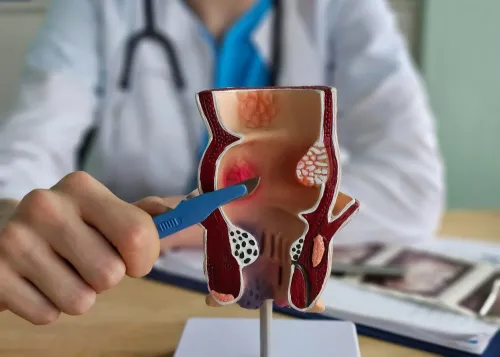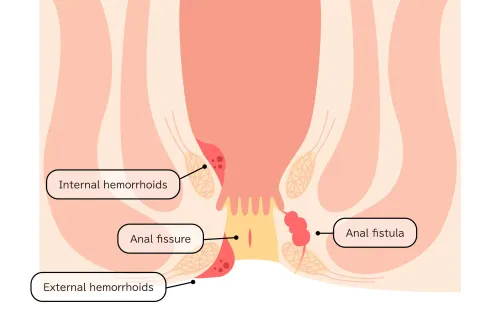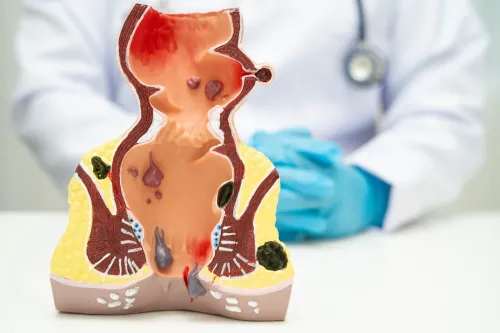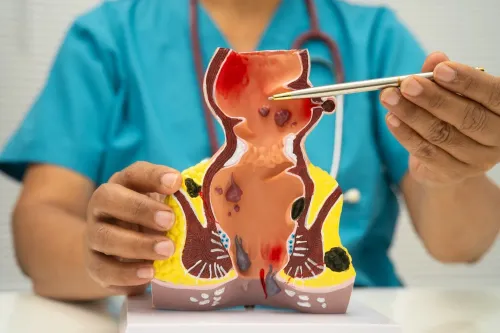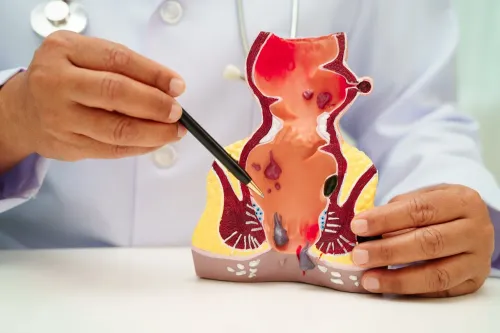
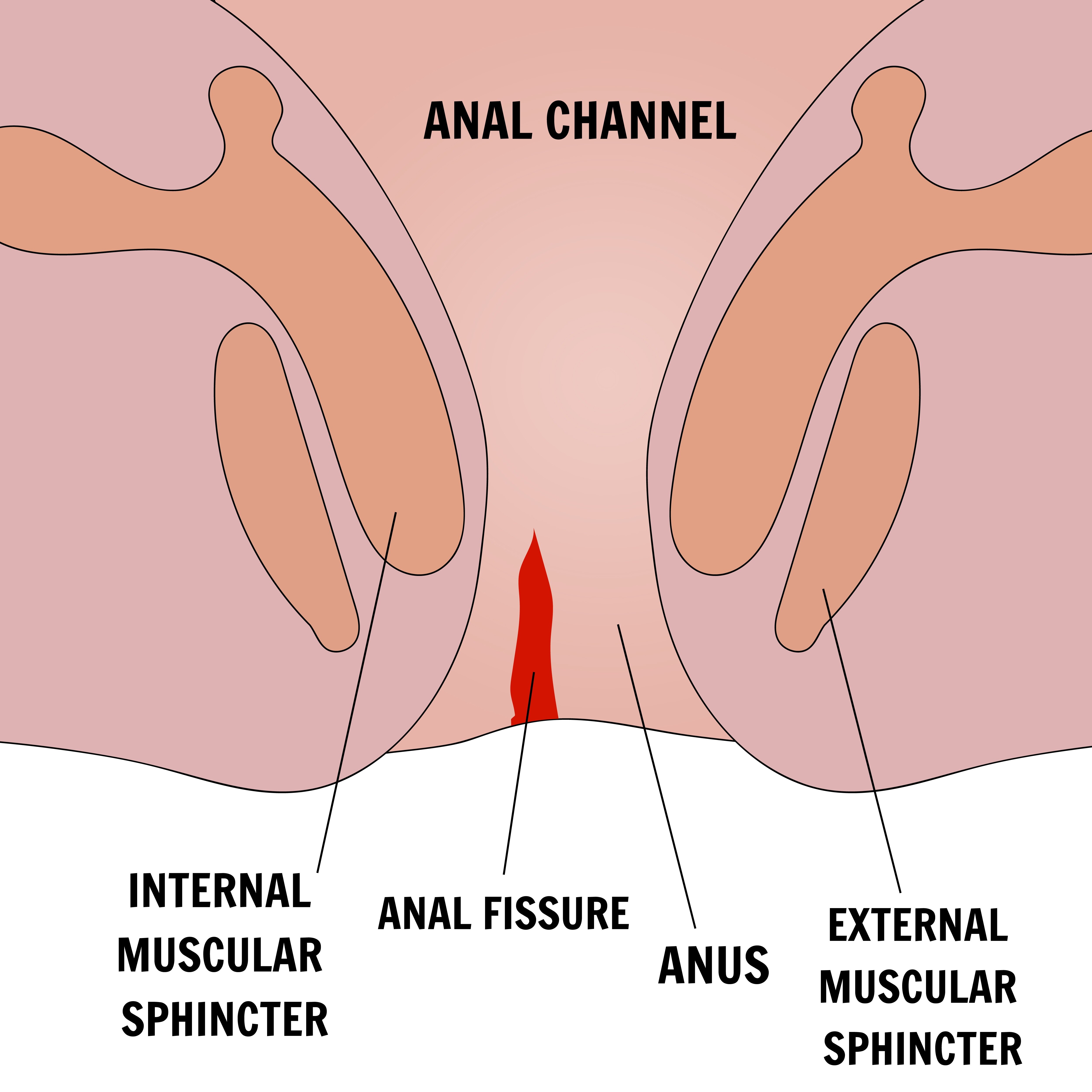
An anal fissure that lasts beyond six weeks can become trapped in a cycle of tearing, internal sphincter spasm, reduced blood flow, and painful bowel movements. By the end, you will know how chronic fissures are confirmed, what laser-assisted internal sphincterotomy actually changes, how it compares with other treatments, and which medical factors make muscle division more or less suitable.
Key takeaways
- A fissure lasting over six weeks is considered chronic.
- Laser-assisted sphincterotomy reduces internal sphincter pressure to support healing.
- Keep stools soft with fluids, fibre, and prescribed bowel-care measures.
- Discuss extra caution if you have incontinence, inflammatory bowel disease, or prior anal surgery.
How a fissure becomes chronic and how doctors confirm it
A fissure becomes chronic when it is a fissure lasting more than 6 weeks, especially when pain or bleeding keeps returning after bowel movements. The usual cycle starts with hard stool or diarrhoea, followed by spasm and increased resting pressure in the internal anal sphincter.
That pressure reduces blood flow to the anoderm, so the tear cannot close.
Doctors usually confirm a chronic anal fissure through your symptom history and a careful inspection of the anus. A sentinel skin tag at the outer end, a hypertrophied anal papilla inside the canal, thickened edges, or visible internal sphincter muscle supports the diagnosis.
A gentle digital rectal examination may be postponed if pain is severe; anoscopy can show the fissure and internal features once examination is tolerable.
A posterior or anterior midline tear with typical pain fits the usual pattern. Further investigation is needed when the fissure is lateral, multiple, unusually large, painless, recurrent despite treatment, or associated with discharge or systemic symptoms. Doctors may then investigate:
- Crohn’s disease or another inflammatory bowel condition
- Infection, trauma, or immunosuppression
- Anal or rectal cancer
Depending on your symptoms, that assessment can include anoscopy, colonoscopy, swabs, imaging, or a biopsy. Confirming the cause matters before choosing laser treatment.
What laser-assisted internal sphincterotomy actually does
Laser-assisted internal sphincterotomy divides a controlled portion of the internal anal sphincter, the involuntary muscle that keeps the anus closed. Releasing this muscle lowers resting pressure, improves blood flow around the fissure, and allows the chronic wound to heal; the laser does not automatically remove, seal, or cauterise the fissure itself.
“Laser treatment” can describe a different operation: laser fissurectomy. In that procedure, the surgeon ablates or excises the fissure’s fibrotic edges and sentinel tissue to expose a healthier wound surface. It leaves the internal anal sphincter intact, so it does not correct high muscle pressure when sphincter spasm is the main problem.
The operation usually follows this sequence:
- You receive local anaesthesia with sedation, spinal anaesthesia, or general anaesthesia, depending on the planned technique and your medical needs.
- You lie in a position that gives the surgeon access to the anal canal, commonly on your side, face down, or in lithotomy position.
- Through a small incision at the side of the anal opening, the surgeon identifies and divides only the planned segment of the internal anal sphincter with laser energy.
- If a laser fissurectomy is also planned, the surgeon removes the hardened fissure tissue separately; the remaining wound heals naturally.
- The surgeon checks bleeding, places a small dressing when needed, and monitors you as the anaesthetic wears off.
It is usually a same-day procedure. You can leave after urinating, walking safely, and receiving instructions about pain relief, stool-softening, wound care, and warning symptoms.
How laser treatment compares with other fissure treatments
Laser-assisted sphincterotomy offers a muscle-release approach similar in purpose to lateral internal sphincterotomy, but it is not automatically safer or more effective. The key comparison is whether the internal sphincter is divided, how much is divided, and how strong the evidence is for that exact technique.
| Option | What it does | Main trade-off |
|---|---|---|
| Laser-assisted sphincterotomy | Uses laser energy to divide part of the internal sphincter and reduce spasm. | Small studies support it; settings and technique vary, so long-term healing and continence data are less established. |
| Conventional lateral internal sphincterotomy | Divides the muscle with a conventional blade; it has the strongest surgical evidence and commonly heals 88–100% of chronic fissures. | A permanent muscle cut brings a minority risk of short- or long-term flatus or fecal incontinence. |
| Fissurectomy | Removes scarred fissure edges or sentinel tissue without necessarily cutting the sphincter. | It may leave high muscle pressure untreated, so surface healing alone can fail. |
| Botulinum toxin | Temporarily relaxes the internal sphincter through an injection. | It avoids permanent division, but healing and recurrence can be less predictable than surgery. |
| Prescription creams | Diltiazem, nifedipine, or glyceryl trinitrate relax the sphincter during treatment. | They avoid an operation but require consistent use and can cause headache or local irritation; persistent fissures may need another option. |
A laser fissurectomy is therefore different from laser-assisted sphincterotomy, despite the shared label laser treatment. Ask which tissue will be treated, whether muscle will be divided, and what outcomes the surgeon’s exact method has documented.
Recovery, bowel care, and the practical trade-offs
Expect postoperative pain and bowel movement discomfort for several days, especially after laser fissurectomy, because the treated area remains an open healing wound. Small bleeding or drainage can occur; urinary retention, infection, persistent fissure, and recurrence need prompt review if symptoms worsen rather than settle.
Your bowel-care plan matters more than the laser label. Follow the prescribed wound care, keep the area clean as instructed, and aim for soft, formed stools without repeated straining.
- Use the fiber and fluid plan recommended for you.
- Continue constipation prevention, particularly if an opioid painkiller was prescribed.
- Treat diarrhoea as well as constipation; frequent loose stools can repeatedly irritate the wound.
- Avoid sitting on the toilet for long periods or forcing a bowel movement.
- Ask before restarting strenuous activity, especially if bleeding or pain increases.
Laser treatment does not guarantee faster healing or eliminate continence risk. The actual recovery depends on whether the procedure removed fissure tissue or divided the internal sphincter.
| Procedure | Main recovery issue | Practical trade-off |
|---|---|---|
| Laser fissurectomy | More wound-related pain, drainage, and bowel movement discomfort | Avoids a formal sphincter cut, but the wound must heal |
| Laser-assisted sphincterotomy | Pain from the incision and possible continence symptoms | Reduces muscle spasm, but carries the same type of sphincter-related risk as a conventional cut |
| Conventional medical treatment | Longer adherence to creams and stool regulation | Avoids an operation, but a chronic fissure can persist or recur |
Evidence for laser procedures remains smaller than evidence for established treatments, so claimed precision is not proof of better long-term healing.
Who may benefit and when a laser procedure needs extra caution
Laser-assisted internal sphincterotomy best fits a patient with a confirmed chronic primary fissure, persistent symptoms despite bowel-softening treatment and prescription therapy, and normal baseline continence. The decision depends on sphincter tone and how much internal sphincter must be divided, not on the word “laser.”
Extra caution is needed when continence control may already be reduced:
- Previous vaginal childbirth injury, existing leakage of gas or stool, an earlier anorectal operation, inflammatory bowel disease, or a suspected sphincter defect raises fecal incontinence risk.
- A tailored, limited muscle division or a nonsphincter-cutting treatment may be safer than routine sphincterotomy.
- Ask Shree Hospital - 08048060809 whether your examination includes a continence history and, when indicated, anal ultrasound or manometry before choosing the procedure.
An atypical anal fissure needs investigation before laser treatment. A lateral or multiple fissure, an unusually large or painless lesion, repeated recurrence, discharge, fever, weight loss, or other systemic symptoms can indicate Crohn’s disease, infection, trauma, immune suppression, or cancer.
| Patient pattern | What it suggests | Treatment direction |
|---|---|---|
| Typical posterior or anterior fissure, intact continence | Primary chronic fissure with manageable risk | Consider sphincterotomy after failed medical care |
| Leakage, childbirth injury, prior anorectal surgery, low sphincter tone | Higher continence risk | Discuss limited or nonsphincter-cutting treatment |
| Lateral, multiple, painless, recurrent, or draining fissure | Possible secondary cause | Investigate before operating; treat the cause first |
Related service
Other Surgies Chronic anal fissures can cause intense pain, discomfort, and difficulty during daily activities like sitting or passing stool. View service → |
Frequently asked questions
When does an anal fissure become chronic, and how is it confirmed?
A fissure is considered chronic when it lasts more than six weeks or repeatedly returns. Doctors confirm it through symptom history and an examination, looking for features such as a visible tear, a skin tag, or exposed internal sphincter muscle.
What does laser-assisted internal sphincterotomy do?
The procedure uses laser energy to divide part of the internal anal sphincter, reducing excessive resting pressure and helping the fissure heal. A surgeon determines the amount treated to limit damage to continence muscles.
How does laser treatment compare with other fissure treatments?
Treatment options include fibre and stool-softening measures, topical medicines such as glyceryl trinitrate or diltiazem, botulinum toxin injections, and conventional lateral internal sphincterotomy. They differ in healing reliability, recurrence risk, recovery time, and the risk of continence changes.
What is recovery like after fissure laser treatment?
Recovery focuses on preventing hard stools and straining through fluids, fibre, prescribed medicines, warm sitz baths, and gentle hygiene. Follow your surgeon’s activity and wound-care instructions, and seek review for heavy bleeding, fever, worsening pain, or difficulty passing urine.
Who needs extra caution before a laser fissure procedure?
Discuss extra caution if you have existing leakage, an injury from childbirth, inflammatory bowel disease, previous anal surgery, a prior sphincter injury, or reduced sphincter control. Your surgeon may recommend tests or a different treatment plan.