Rectal bleeding, anal pain and a new swelling range from minor irritation to an abscess, significant gastrointestinal bleeding or a condition requiring prompt treatment. You will learn which symptoms require emergency care, when to book an anorectal-specialist appointment, and what information and examinations may be needed.
Key takeaways
- Seek same-day emergency care for heavy, continuous bleeding or large clots.
- Book prompt assessment when bleeding recurs, worsens or accompanies severe pain.
- Painful swelling can indicate an abscess, thrombosed haemorrhoid or another condition.
- Bring medication details, symptom timing and bleeding-pattern information to your appointment.
When do pain, bleeding or swelling require emergency care?
Do not wait for a routine appointment if you have emergency rectal bleeding: bleeding that is heavy, continuous or contains large clots needs same-day emergency care.
Black stool, tarry stool or maroon stool can signal significant gastrointestinal bleeding rather than ordinary hemorrhoidal bleeding, especially when bleeding causes fainting, dizziness, confusion, marked weakness, rapid worsening or shortness of breath.
Seek urgent assessment for these anal pain emergency signs:
- Severe, constant anal or deep pelvic pain, particularly with fever, chills, vomiting, urinary difficulty, or inability to pass stool or gas.
- Rapidly increasing swelling, or a painful lump if you have diabetes, immunosuppression or another serious medical vulnerability. An abscess can require drainage, not antibiotics alone.
- Prolapsed hemorrhoidal or rectal tissue that cannot be gently pushed back, or tissue that becomes dusky, purple or black. Incarceration or compromised blood supply is possible.
A painful swelling with fever or chills is not safe to label as piles. Arrange immediate care if any warning sign is worsening, and do not drive yourself if you feel faint, confused or severely weak.
What does the bleeding pattern suggest about how quickly you should be assessed?
A small streak of bright-red blood on toilet paper or the stool surface can occur with a fissure or hemorrhoid, especially after hard stool, but it does not prove either diagnosis. Persistent or recurrent bleeding needs assessment even when the amount is small.
Blood mixed with stool, dripping rectal bleeding into the toilet, bleeding unrelated to bowel movements, repeated episodes or increasing volume raise concern for bleeding higher in the bowel, polyps, inflammatory bowel disease or cancer. Arrange prompt evaluation rather than assuming hemorrhoids.
New rectal bleeding over 40 deserves timely diagnostic assessment. Seek the same level of attention if you have:
- Iron-deficiency anemia
- Unexplained weight loss
- A sustained change in bowel habit
- Abdominal pain
- A palpable abdominal or rectal mass
- A personal or family history of colorectal cancer or inflammatory bowel disease
The clinician may recommend a digital rectal examination, anoscopy, colonoscopy or another bowel evaluation based on your age, symptoms and risk factors. Screening does not replace evaluation of bleeding; screening tests are for people without symptoms, while bleeding requires diagnostic assessment.
Could the pain or swelling be something other than piles or a fissure?
Appearance alone cannot safely identify the cause of anal pain, bleeding or swelling. Internal hemorrhoids commonly bleed without severe pain, so severe or constant pain should not automatically be called piles.
| Pattern | Possible explanation | What it means |
|---|---|---|
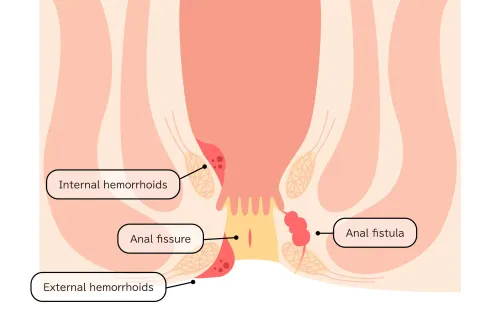
| Sudden severe pain with a firm bluish lump at the anal margin | Thrombosed external hemorrhoid | Selected patients with severe symptoms may benefit from excision when treated early, commonly within about 72 hours. |
| Tender swelling with fever, chills, increasing pain or difficulty sitting | Perianal abscess | Drainage is usually required; antibiotics alone do not replace drainage for a drainable abscess. |
| Persistent opening, pus or intermittent drainage after swelling improves | Fistula-in-ano | These anal fistula symptoms need specialist assessment because antibiotics alone often do not cure the tract. |
| Sharp or tearing pain during and after bowel movements with a small amount of bright-red blood | Anal fissure | Symptoms lasting beyond roughly six weeks indicate chronic anal fissure and may need prescription treatment or a procedure. |
A prolapsed hemorrhoid or rectal tissue can resemble a lump. Skin disease, inflammatory bowel disease, polyps, anal cancer and colorectal cancer can also cause similar symptoms and require examination. Severe deep pain without an external lump still warrants assessment, especially with fever or urinary difficulty.
A clinician may need inspection, digital examination, anoscopy or imaging to distinguish these conditions.
How long should you wait before booking a specialist appointment?
Book an appointment if pain, bleeding or swelling lasts beyond three to five days, returns after settling, or fails to improve after a short period of safe home care. Repeated symptoms deserve assessment even when each episode seems mild.
1. During the next few days, reduce triggers: increase fiber gradually, drink adequate fluids, use a clinician-approved stool softener when needed, avoid straining and limit toilet sitting. These measures help when hard stools or diarrhea perpetuate symptoms, but improvement does not make recurrent bleeding safe to ignore.
2. Arrange earlier assessment for anticoagulants and rectal bleeding, antiplatelet treatment, a bleeding disorder, inflammatory bowel disease, diabetes, weakened immunity or pregnancy. Do not stop prescribed anticoagulants without medical advice; changing them independently can cause dangerous clotting.
3. Book a specialist review instead of repeating self-treatment if you have recurrent anal swelling, tissue that repeatedly prolapses, mucus leakage, fecal incontinence or a draining opening. These findings can indicate prolapse, fistula or another condition requiring examination.
If symptoms keep returning or have not clearly improved after several days of these measures, this is when to see an anorectal specialist rather than extending home treatment.
What will an anorectal specialist check before recommending treatment?
1. The consultation starts with a medication and history review because these details change both urgency and treatment safety. Tell the anorectal specialist how long bleeding has lasted, your bowel habits, any weight change or anemia, family history of colorectal cancer, inflammatory bowel disease, prior anorectal operations, pregnancy, and immune status.
List aspirin, clopidogrel, warfarin, apixaban and other blood thinners; do not stop prescribed anticoagulants without medical advice.
2. The clinician may inspect the anus, perform a digital rectal examination and use anoscopy to view the anal canal and lower rectum. These checks can identify fissures, hemorrhoids, prolapse, inflammation, a mass or an opening that suggests fistula.
3. Depending on your age, screening status, symptoms and risk factors, the clinician may arrange colonoscopy for rectal bleeding or another bowel evaluation. Do not postpone symptomatic bleeding until a routine screening test, especially with anemia, weight loss, sustained bowel-habit change, abdominal pain or cancer history.
4. Severe deep pain without an external lump, fever or urinary difficulty can require pelvic CT or MRI. Suspected fistula may require examination under anesthesia, pelvic MRI for fistula or endoanal ultrasound.
5. An abscess may need drainage. A fissure, thrombosed hemorrhoid, prolapse and fistula require different decisions, so diagnosis—not the symptom label—determines treatment. Shree Hospital - 08048060809 is one Nashik option for specialist-led evaluation when you need these findings assessed.
What should you do while arranging care, and what should you take to the appointment?
While arranging care, use safe home care for hemorrhoids without treating it as a diagnosis. Increase dietary fiber gradually, drink adequate fluids, and ask a clinician about a fiber and stool softener plan. Avoid straining, prolonged toilet sitting, and squeezing or puncturing any lump.
| Option | What to do | When it applies |
|---|---|---|
| Home care | Track symptoms and seek assessment if there is no clear improvement soon | Mild symptoms without worsening |
| Urgent care | Get immediate help for heavier bleeding, worsening pain, fever, swelling, weakness, dizziness, or fainting | Do not wait for a routine appointment |
- Record when the episode began, bleeding color and amount, whether it follows bowel movements, fever, drainage, bowel-habit changes, and relevant pain or swelling.
- Take photographs only when appropriate and comfortable; never delay care to obtain one.
- Bring every medicine and dose, including aspirin, clopidogrel, warfarin, apixaban, or another anticoagulant, plus your medical and family history. Do not stop prescribed anticoagulants without medical advice.
A Nashik anorectal specialist can discuss symptoms and urgency. If home measures fail to produce clear improvement within a short period, arrange care promptly; emergency warning signs require immediate emergency care, not a routine booking.
Frequently asked questions
When do pain, bleeding or swelling require emergency care?
Seek same-day emergency care for heavy or continuous rectal bleeding, large clots, fainting, severe weakness, black stools, fever with worsening pain, or rapidly increasing swelling.
What does the bleeding pattern suggest about how quickly you should be assessed?
Bright-red blood on toilet paper can come from a lower anorectal source, but recurrent, increasing or unexplained bleeding needs prompt assessment. Black, tarry stools or heavy bleeding require urgent care.
Could the pain or swelling be something other than piles or a fissure?
Yes. A painful lump can be a thrombosed haemorrhoid or perianal abscess; other causes include infection, fistula, inflammatory bowel disease and colorectal conditions.
How long should you wait before booking a specialist appointment?
Book an appointment promptly when symptoms last more than a few days, recur, worsen, or do not improve with basic care. Do not wait for a routine visit if emergency warning signs appear.
What will an anorectal specialist check before recommending treatment?
The specialist will review your symptoms and medical history, inspect the area, and decide whether a digital rectal examination, anoscopy, blood tests or further investigations are appropriate.