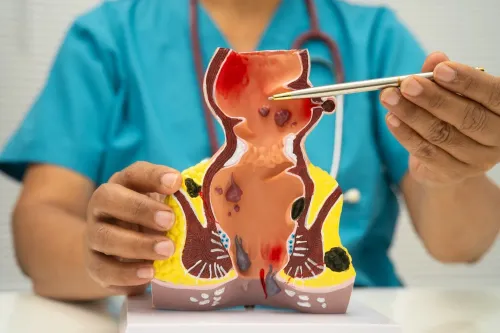
Pain around the anus that lasts beyond a few days, returns after seeming to settle, or continues after bowel movements deserves more than repeated self-treatment. You will learn how to match pain patterns with possible causes, recognise urgent warning signs, choose the right clinician, and prepare for an accurate assessment.
Key takeaways
- Seek care when anal pain lasts several days, returns, or disrupts daily activities.
- Pain during or after bowel movements can point to fissures, abscesses, or other conditions.
- See a proctologist or colorectal surgeon for persistent or unexplained anal pain.
- Ask about examination, anoscopy, imaging, and warning signs before leaving the appointment.
How long should anal pain last before you seek care?
Anal pain lasting more than a few days deserves medical advice, especially if it returns, continues after bowel movements, or interferes with sitting, walking, sleeping, or passing stool. Arrange an appointment to discuss persistent anal pain rather than assuming it is hemorrhoids; uncomplicated internal hemorrhoids are commonly painless.
1. Seek same-day medical assessment for anal pain if it is severe, constant, throbbing, or worsening, particularly with fever, chills, increasing swelling, redness, pus, or difficulty urinating. These features can indicate an anorectal abscess, which often needs drainage rather than antibiotics alone.
2. Go to an emergency department for heavy bleeding, dizziness or fainting, black stool, inability to pass stool or urine, rapidly enlarging swelling, or severe pain with fever. Do not wait for a routine clinic appointment.
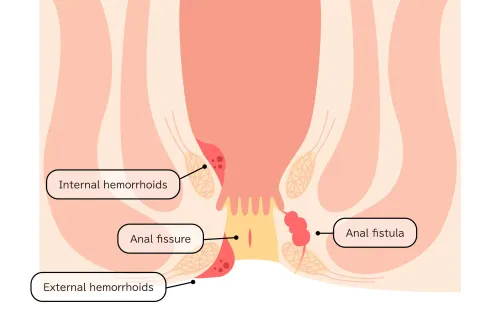
3. Book a consultation when pain keeps recurring, a painful lump remains, or drainage continues after an abscess or swollen area improves. Intermittent pus or blood from a small opening can indicate a fistula.
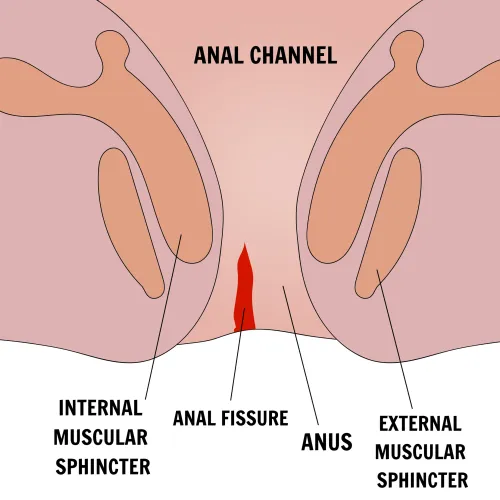
4. Arrange assessment if fissure-like pain continues for six to eight weeks. Sharp pain during defecation followed by burning or aching for hours suggests a fissure; a sudden, very painful lump at the anal margin suggests a thrombosed external hemorrhoid.
Knowing when to see an anal pain doctor prevents delayed treatment. A normal external appearance does not rule out a deep abscess, so ongoing or unexplained symptoms still need examination.
What different anal pain patterns can indicate
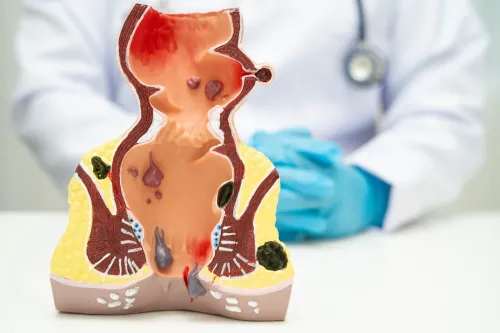
Sharp pain during a bowel movement that turns into burning or aching for hours fits an anal fissure pain pattern more than ordinary hemorrhoids. A suddenly appearing, tender lump at the anal edge points more toward thrombosed hemorrhoid symptoms.
| Pattern | Clues | What it may indicate |
|---|---|---|
| Anal fissure | Cutting pain with stool, followed by prolonged burning; a small streak of bright-red blood | A tear caused by stretching or hard stool |
| Thrombosed external hemorrhoid | Sudden painful blue-purple lump; pain peaks over the first few days | Clotted blood in an external hemorrhoid |
| Anorectal abscess | Constant or throbbing pain, increasing swelling, redness, fever, chills, pus, or trouble urinating | A pocket of infection requiring prompt assessment |
| Anal fistula | A recurring lump or tiny opening that releases pus or blood; pain may ease after drainage | A persistent tunnel after an abscess |
| Dermatitis | Surface burning, itching, rawness, rash, or moisture-related soreness | Irritation from soap, wipes, creams, sweating, or leakage |
| Constipation-related trauma | Soreness after passing a large, hard stool, sometimes with superficial bleeding | Mechanical injury without a deeper abscess |
| Referred or functional pain | Pain is not tied to bowel movements or visible skin changes; levator ani pain causes pelvic-floor tenderness, while proctalgia fugax causes brief attacks | Pain referred from pelvic or urinary structures, or a functional anorectal disorder |
Severe constant pain, fever, rapidly increasing swelling, pus, or difficulty passing stool or urine needs same-day care. A normal external inspection does not exclude a deep abscess, and recurring drainage deserves evaluation for a fistula.
Which doctor should assess persistent anal discomfort?
Choose a proctologist for anal pain that persists, recurs, or follows bowel movements. A general surgeon for anorectal conditions is also appropriate, especially when a fissure, abscess, fistula, or thrombosed external hemorrhoid is possible.
Choose a gastroenterologist for rectal bleeding that recurs, mixes with stool, accompanies altered bowel habits or weight loss, or occurs with a family history of bowel disease.
| Where to go | Choose it when | What it addresses |
|---|---|---|
| Emergency department | Severe constant pain, fever, chills, rapidly increasing swelling, pus, inability to pass urine or stool, heavy bleeding, dizziness, or black stool | Possible abscess, significant bleeding, or another urgent problem |
| Proctologist or general surgeon | Pain, lump, drainage, or a suspected fissure, fistula, or hemorrhoid persists | Focused anorectal examination and treatment planning |
| Gastroenterologist | Bleeding is recurrent or accompanied by bowel changes, anemia symptoms, or weight loss | Bleeding from inflammatory bowel disease, polyps, or colorectal lesions |
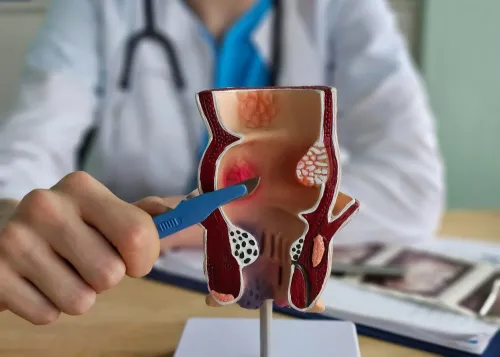
The appointment usually begins with questions about onset, bowel movements, bleeding, discharge, fever, previous abscesses, medicines, and family history. The clinician inspects the perianal skin, then performs a digital rectal examination when tolerable, followed by anoscopy to view the anal canal.
If pain prevents examination, ask about pain control or examination under anesthesia rather than repeated forceful attempts. Shree Hospital - 08048060809 can provide a surgical assessment to distinguish conditions needing observation, medication, drainage, or procedures such as sphincterotomy or fistulotomy.
Related services
Other Surgies Chronic anal fissures can cause intense pain, discomfort, and difficulty during daily activities like sitting or passing stool. View service → |
Pile Fissure and Fistula Ksharsutra Treatment for Fistula An anal fistula is a painful and recurring condition that can significantly affect daily life and comfort. View service → |
Which tests and appointment questions can prevent a missed diagnosis?
A normal-looking opening does not rule out a deep abscess, fistula, inflammatory disease, or mass. Imaging is not automatic for every episode of pain.
Ask about further testing when pain persists, drainage returns, or an office examination is intolerable; blood tests for rectal bleeding or infection can check anemia and inflammation, while pelvic MRI is the usual MRI for anal fistula when deeper disease is suspected.
| Test | What it can clarify | When it applies |
|---|---|---|
| Blood tests | Anemia, inflammation, or infection | Recurrent bleeding, fever, weakness, or suspected inflammatory disease |
| Pelvic MRI | Deep abscess, fistula tracks, Crohn disease, or a mass | Recurrent abscesses, persistent drainage, or complex fistula |
| Endoanal ultrasound | Fistula location and anal sphincter structure | Suspected tract or sphincter injury |
| Examination under anesthesia | Hidden abscesses, fistulas, or lesions without painful movement | Severe pain prevents a reliable examination |
Before the appointment, record bleeding colour and frequency, drainage, fever, bowel changes, weight loss, previous abscesses, operations, and medicines. Take relevant reports. Ask:
- What diagnosis are you testing for, and what finding would change treatment?
- Do I need pelvic MRI, endoanal ultrasound, or examination under anesthesia?
- What are the alternatives, anaesthesia needs, recovery time, continence risks, and recurrence risk?
- What happens if I wait or choose non-surgical treatment?
- Which symptoms require urgent review while I wait?
What can you do safely while waiting for an assessment?
Keep stools soft and formed while waiting. Hard stool and straining worsen constipation and anal fissure, while diarrhoea, leakage, and repeated wiping damage already sore skin. Practical anal pain self-care includes:
- Drink enough fluid to keep urine pale yellow.
- Increase dietary fibre gradually; ask a clinician about a stool softener or osmotic laxative if diet is not enough.
- Rinse with lukewarm water, pat dry, and avoid scented wipes, soaps, and scrubbing.
- Ask a pharmacist or clinician about perianal dermatitis treatment if burning, moisture, or rash persists.
A lidocaine-containing cream can dull pain briefly, but it cannot treat an abscess, fistula, fissure, inflammatory disease, or cancer. Do not keep escalating anaesthetic or steroid creams; prolonged unsupervised use can irritate or thin skin and delay diagnosis. Arrange an examination if a short trial fails.
A fissure lasting beyond 6–8 weeks is chronic and may need prescription nitroglycerin, a topical calcium-channel blocker, botulinum toxin, or surgery. If examination is too painful, ask whether pain control or examination under anaesthesia is safer than repeated forced examinations.
Before choosing a procedure, use these questions to ask before anorectal surgery:
- Are non-surgical treatments or botulinum toxin reasonable first?
- What anaesthesia, recovery time, and wound care will I need?
- How often does the problem recur?
- What is my risk of impaired gas or stool control, especially with prior childbirth injury, incontinence, inflammatory bowel disease, or anorectal surgery?
Frequently asked questions
How long should anal pain last before you seek care?
Seek medical advice when anal pain lasts more than a few days, returns, continues after bowel movements, or interferes with sitting, walking, sleeping, or passing stool. Arrange urgent care for severe or rapidly worsening pain, fever, swelling, pus, heavy bleeding, or difficulty passing stool or urine.
What different anal pain patterns can indicate?
Sharp pain during or after a bowel movement can occur with an anal fissure. Constant throbbing pain, swelling, fever, or pus can indicate an abscess. Pain with a recurrent opening or drainage can occur with a fistula. Pain does not reliably prove that hemorrhoids are responsible; uncomplicated internal hemorrhoids are commonly painless.
Which doctor should assess persistent anal discomfort?
Start with a proctologist or colorectal surgeon for persistent, recurrent, or unexplained anal pain. A general surgeon with anorectal experience can also assess the condition and arrange tests or referral when needed.
Which tests and appointment questions can prevent a missed diagnosis?
Ask whether you need a visual inspection, digital rectal examination, or anoscopy, and whether imaging such as ultrasound or MRI is necessary. Tell the doctor when pain starts, how long it lasts, whether it follows bowel movements, and whether you have bleeding, discharge, fever, constipation, or a lump.
What can you do safely while waiting for an assessment?
Keep stools soft with adequate fluids and fibre, avoid straining, clean gently with water, and consider warm sitz baths. Do not insert creams, suppositories, or objects without medical advice. Seek urgent care if severe pain, fever, spreading redness, pus, heavy bleeding, or urinary difficulty develops.
Related services
Pile Fissure and Fistula Living with an anal fistula can be painful, uncomfortable, and emotionally distressing. View service → |
Pile Fissure and Fistula Hemorrhoidectomy (Surgery for Piles) Severe piles (hemorrhoids) can cause persistent pain, bleeding, and discomfort, making everyday activities difficult. View service → |
Pile Fissure and Fistula Anal fistula is a painful and recurring condition that can affect your comfort, confidence, and daily routine. View service → |
Pile Fissure and Fistula Piles (hemorrhoids) can cause discomfort, pain, and embarrassment, affecting your daily life and confidence. View service → |