A first visit usually begins with questions about your symptoms, bowel habits, medicines, and medical history—not an immediate procedure. By the end, you should know what examination was performed, whether further testing is needed, and what diagnosis and next step the clinician recommends.
Key takeaways
- Bring prescriptions, test reports, operation records, and your current medicine list.
- Write down bleeding, pain, swelling, bowel changes, and symptom duration.
- Expect questions, a private examination, and an explanation before any treatment decision.
- Ask why each test or treatment is needed, including benefits, risks, and alternatives.
What should you bring, and how should you prepare before arriving?
Bring your records and symptom notes to the first piles consultation, then confirm preparation requirements when booking. What to bring to piles clinic includes previous prescriptions, test reports and operation records, a current medicine list, and details of any medicine allergies.
Write a brief timeline before you leave home:
- Record when bleeding, pain, itching, swelling, discharge, or a lump began, and note whether symptoms are worsening, recurring, or linked to bowel movements.
- Note your usual bowel frequency, constipation or diarrhoea, time spent on the toilet, straining, and any change in bowel habits.
- List anticoagulants, such as warfarin, apixaban, rivaroxaban, or aspirin, plus other medicines that affect bleeding. Do not stop any medicine unless the prescribing clinician tells you to.
Check-in usually includes registration, identity and contact details, medical history, and a short description of your reason for visiting. Ask how long to allow, and arrive early if forms are required. Take a companion if you want help remembering instructions or feel anxious.
Unless the clinic gives different instructions for a planned test, do not assume you need fasting, an enema, bowel preparation, or a special diet for the first examination. Confirm these instructions when booking.
Which questions will the clinician ask about your symptoms?
Expect questions about your bleeding, bowel movements, and other symptoms before any procedure. Describe rectal bleeding colour and frequency, amount, timing, and where you see it. Use plain details without embarrassment; the pattern helps distinguish piles from other causes.
| Bleeding pattern | What to report | Why it matters |
|---|---|---|
| Bright-red blood | On toilet paper, dripping into the bowl, or coating the outside of stool; state how much and how often | This pattern differs from blood mixed through stool |
| Blood mixed through stool | Say whether blood runs through the stool and whether bleeding is new or recurrent | It needs assessment beyond assuming piles |
| Black or tarry stool | Report it immediately, especially with weakness or dizziness | It can indicate bleeding higher in the digestive tract |
| Bleeding after a bowel movement | Say whether it stops promptly or continues | Ongoing bleeding needs faster assessment |
The clinician will ask about pain during bowel movements and pain afterwards, itching, swelling, a lump or prolapse, discharge, constipation and diarrhoea, straining, toilet time, and changes in bowel habits. Explain whether a lump returns on its own or needs manual replacement.
Mention previous anorectal disease, personal or family history of colorectal cancer or inflammatory bowel disease, and every medicine, especially anticoagulants.
Seek urgent assessment instead of waiting for a routine appointment if you have severe constant or worsening pain, fever, spreading redness, pus, dizziness, fainting, heavy or continuing bleeding, or difficulty passing urine or stool. A sudden painful bluish lump and fever with pus are not routine piles symptoms.
What happens during the physical examination?
Expect the examination to proceed in stages, with the clinician explaining what each step is checking before starting. You can ask questions, request a pause, or refuse any part of the examination.
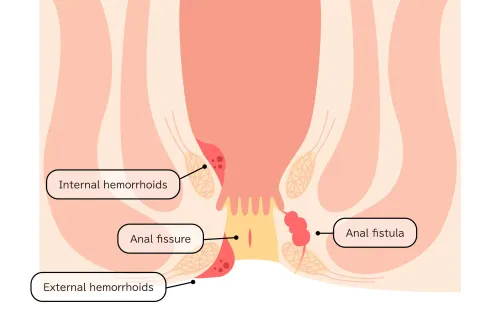
1. Anal inspection comes first. You may lie on your side with your knees drawn up while the clinician examines the skin around the anus for fissures, external swelling, a thrombosed lump, discharge, redness, or prolapse. Privacy, draping, and a chaperone should be offered.
2. A digital rectal examination uses a gloved, lubricated finger inserted gently into the rectum. It helps the clinician assess tenderness, lumps, muscle tone, bleeding, and other abnormalities that inspection cannot detect. Tell the clinician immediately if the pressure becomes painful.
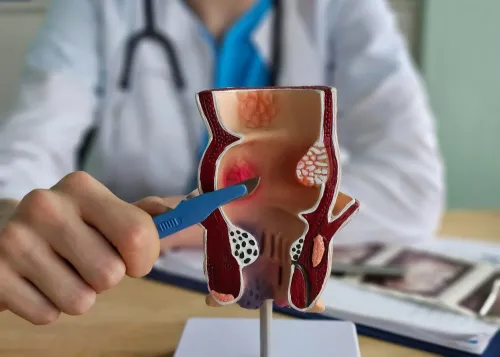
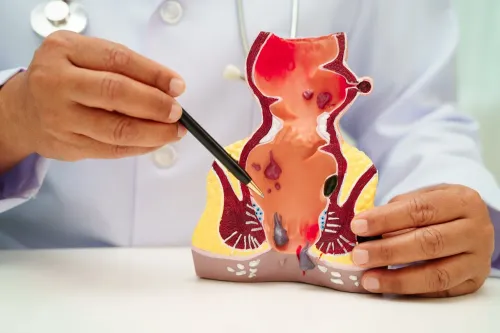
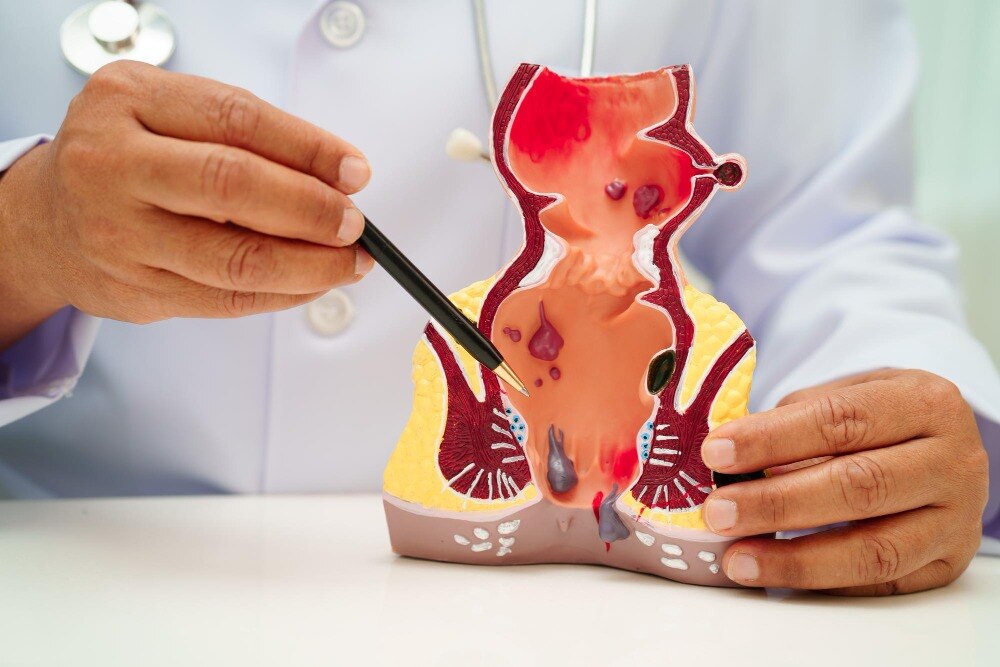
3. Anoscopy or proctoscopy uses a short viewing instrument to examine the anal canal. This allows the clinician to see internal hemorrhoids and other tissue that cannot be viewed from outside.
Uncomplicated internal hemorrhoids are not usually severely painful. If pain is intense, the clinician may postpone the examination, modify it, or perform only the least painful part first while checking for a fissure, thrombosis, strangulation, or abscess. Severe constant pain with fever, spreading redness, pus, or a rapidly worsening swollen lump needs urgent medical assessment.
When will you need blood tests, colon evaluation, or other investigations?
Testing depends on what the bleeding and examination suggest, not on the label “piles” alone. A complete blood count for rectal bleeding helps detect anaemia when bleeding is significant or recurrent.
1. Ask whether a blood test is needed. A complete blood count can show reduced haemoglobin, while further tests may investigate iron-deficiency anaemia and its cause.
2. Ask about colonoscopy indications.
A colonoscopy or another colon evaluation may be appropriate when bleeding persists or has no clear explanation, symptoms do not fit straightforward piles, there is a change in bowel habits, iron-deficiency anaemia is present, a close family history raises concern, inflammatory bowel disease is suspected, or you are due for colorectal cancer screening.
3. Ask what the clinician is ruling out. Rectal bleeding can come from an anal fissure, polyps, colorectal cancer, inflammatory bowel disease, proctitis, or rectal prolapse, which can resemble piles. Further investigations become important when the history or examination is atypical.
4. Before agreeing, ask what each test involves, how to prepare, whether fasting or bowel preparation is required, and when the results will be reviewed.
Do not use a routine consultation for black or tarry stools, fainting, heavy or continuing bleeding, fever, or rapidly worsening pain. Seek urgent medical assessment instead.
What should you know before agreeing to a treatment plan?
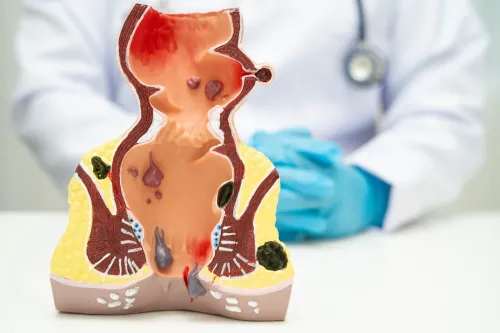
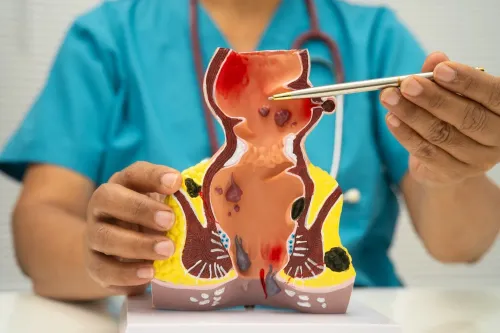
Before agreeing to a plan, ask for the exact diagnosis and whether the problem is internal or external. For confirmed internal hemorrhoids, ask for the hemorrhoid grading: grade I bleeds without prolapse, grade II prolapses with straining and reduces itself, grade III needs manual replacement, and grade IV stays prolapsed.
Ask these questions before leaving:
- Why does this option fit my examination findings?
- What treatment risks and alternatives should I consider?
- Do I need local, regional, or general anaesthesia?
- Will I need admission, or is this suitable for an office procedure consultation?
- How long will recovery take, and when can I work, exercise, and pass stool normally?
- What is the recurrence risk?
- What aftercare, fibre, fluid intake, and bowel-habit changes are required?
- Which symptoms need urgent review?
- What happens if symptoms do not improve?
| Option | When it may fit | What to clarify |
|---|---|---|
| Conservative care | Symptoms without significant prolapse, or bowel triggers such as constipation, diarrhoea, straining, or prolonged toilet sitting | Fibre target, fluids, medicines, and review date |
| Office treatment | Persistent symptoms or clinically significant prolapse; rubber-band ligation mainly suits grade I–II and selected grade III internal hemorrhoids | Anaesthesia, pain, bleeding, recovery, and alternatives |
| Surgery | Grade IV, troublesome grade III, or symptoms unsuitable for office treatment | Admission, wound care, recovery, and recurrence |
A first consultation does not automatically lead to surgery. If you consult Shree Hospital - 08048060809 in Nashik, use the same questions to assess the proposed next step rather than choosing a procedure by name. Leave with written instructions, a follow-up date, and a clear escalation plan.
Frequently asked questions
What should you bring to your first piles clinic consultation?
Bring previous prescriptions, test reports, operation records, a current medicine list, and details of medicine allergies. Write down your symptoms, when they began, and what worsens or relieves them. Confirm fasting or other preparation instructions when booking.
Which questions will a clinician ask about piles symptoms?
The clinician will ask about bleeding, pain, itching, swelling, a lump, mucus, bowel movements, constipation or diarrhoea, symptom duration, previous treatments, and your medical history. Tell them the colour and amount of bleeding and whether it occurs with or without a bowel movement.
What happens during a physical examination for piles?
After explaining the steps and obtaining your consent, the clinician may inspect the skin around the anus, perform a gentle digital rectal examination with a gloved, lubricated finger, and use an anoscope to view the anal canal. You can ask for an explanation, a chaperone, or a pause.
When are blood tests or colon investigations needed for piles?
A blood count can check for anaemia when bleeding is repeated or heavy. Anoscopy, sigmoidoscopy, or colonoscopy may be recommended when bleeding needs another source ruled out, symptoms are atypical, bowel habits change, or age and family history increase concern. The clinician will explain the specific reason for each test.
What should you know before agreeing to a piles treatment plan?
Ask which diagnosis the plan treats, what happens if you wait, expected recovery time, pain and bleeding risks, alternatives, costs, follow-up, and warning signs requiring urgent care. Confirm whether lifestyle changes, medicines, an office procedure, or surgery is the proposed first step.