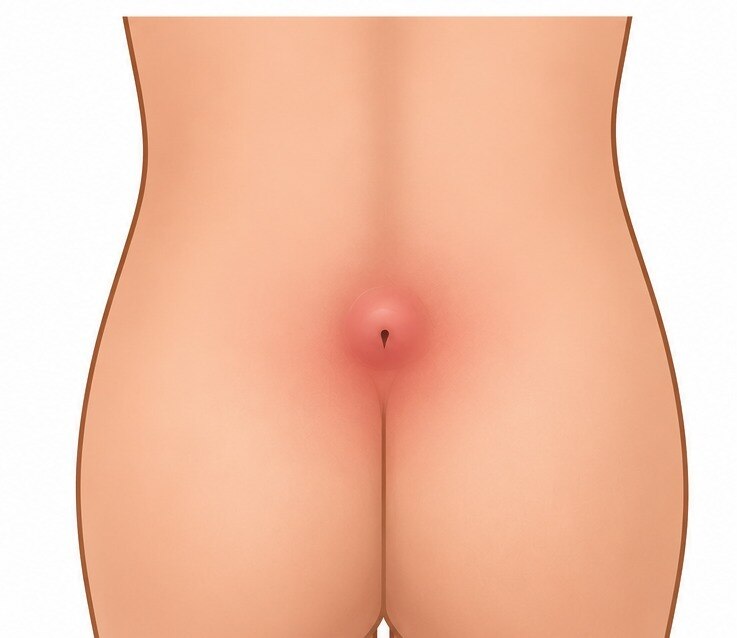
Recurrent pain, a tender lump, redness or foul-smelling drainage near the tailbone can come from pilonidal disease, but an anal fistula, abscess, infected cyst, hidradenitis suppurativa or pressure sore can look similar. By the end, you will know which symptoms need same-day care, what an examination involves, and why drainage, antibiotics and definitive sinus treatment are not interchangeable.
Key takeaways
- A midline opening above the anus points toward pilonidal disease.
- Fever, severe swelling and worsening pain suggest an abscess needing prompt care.
- Chronic drainage often means a sinus tract remains beneath the skin.
- Ask how each procedure affects wound care, recovery time and recurrence risk.
What a pilonidal sinus looks like—and which conditions can mimic it
Recurrent pain and discharge are more likely pilonidal disease when the opening sits in the cleft between the buttocks, above the anus. Pilonidal sinus anatomy usually includes midline pits in natal cleft, where hair penetration and skin debris create inflammation, a sinus tract and sometimes an abscess cavity.
A deep cleft and prolonged sitting increase risk but do not prove the diagnosis.
| Condition | Clues that distinguish it |
|---|---|
| Pilonidal disease | One or more midline pits or openings over the tailbone; recurrent swelling, bleeding or pus from the upper cleft |
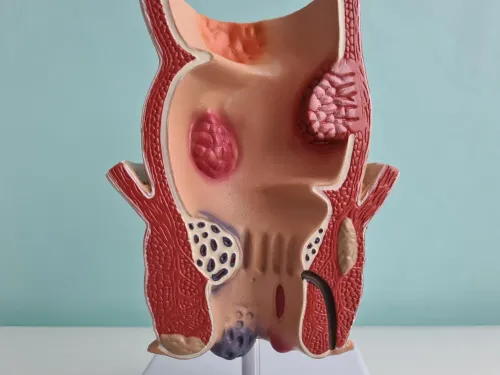
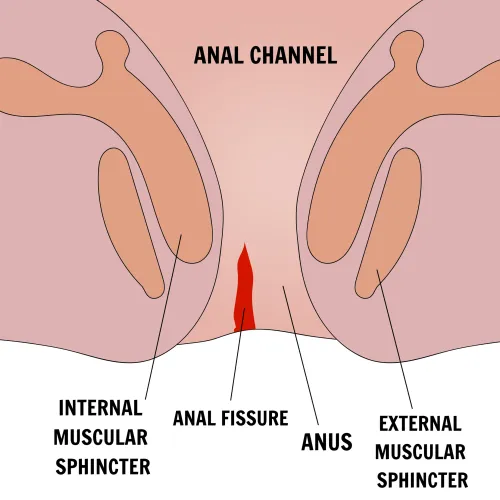
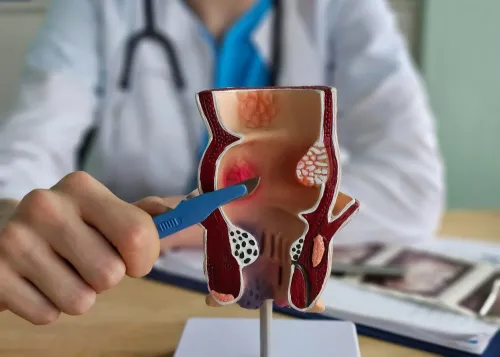
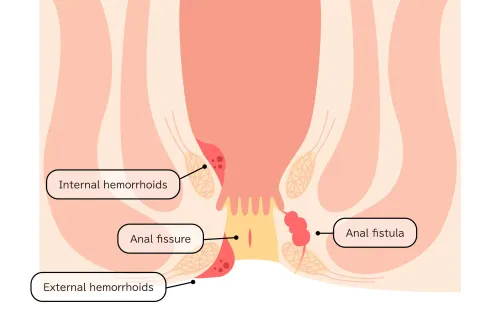
| Anal fistula | An opening close to the anus, often with repeated drainage; a probe or imaging may show a tract connecting to the anal canal |
| Perianal abscess | Rapidly increasing, severe throbbing pain and a hot, tender lump beside the anus; fever can occur |
| Hidradenitis suppurativa | Repeated boils in several areas such as the groin, armpits or buttocks, with scars, multiple openings and interconnected tracts |
| Infected skin cyst | A rounded lump with a central pore, usually off the midline; it may occur anywhere on the skin |
| Pressure sore | A persistent red, purple or open area over a pressure point, linked to immobility or prolonged pressure rather than a pit |
Location alone cannot confirm the cause. Seek same-day assessment for fever, rapidly spreading redness, severe escalating pain, inability to sit, marked weakness or drainage with systemic illness; an examination can identify the opening and decide whether ultrasound or MRI is needed.
What pain, swelling, redness and discharge reveal about the stage
Recurrent pilonidal pain usually means ongoing inflammation in a sinus tract, especially when loose hair and debris keep entering the cleft. A quiet pit needs no treatment, but repeated swelling, drainage or bleeding deserves examination because the tract may remain after each flare settles.
| Finding | What it suggests | Action |
|---|---|---|
| Tender lump with warmth and redness | Active inflammation or a developing abscess | Arrange prompt clinical assessment |
| Rapidly enlarging, tense swelling | A trapped abscess cavity | Seek same-day assessment; it may need incision and drainage |
| Small-volume blood after rubbing or squeezing | Irritated, inflamed pit or fragile granulation tissue | Stop squeezing and arrange review if it recurs |
| Persistent or foul-smelling discharge | An open sinus, retained cavity or ongoing infection | Arrange surgical assessment rather than repeating antibiotics |
| Fever and spreading redness | Cellulitis or infection extending beyond the sinus | Seek same-day medical care |
Pilonidal abscess symptoms become urgent when pain escalates quickly, sitting or walking becomes difficult, or the area feels hot and increasingly swollen. Chills, marked weakness, confusion or drainage with systemic illness also require same-day assessment.
Drainage can relieve pressure without removing the sinus, so the opening may close and later produce another abscess. Antibiotics do not replace drainage for a trapped abscess; clinicians use them when cellulitis, fever, systemic infection or significant medical risk is present. Do not lance it yourself.
Keep the area clean and dry, avoid pressure, and seek care promptly.
How clinicians confirm the diagnosis and find a hidden tract
Pilonidal sinus diagnosis is usually clinical: a clinician identifies the pattern of pits, swelling and drainage rather than ordering a scan immediately. The examination starts with an inspection of natal cleft, looking for midline pits, hair, redness, scars, lateral openings and active discharge.
You will usually be asked to lie on your side or stomach while the clinician gently separates the buttocks. Palpation shows tenderness, warmth, induration or fluctuance and sinus openings; pressing around the cleft can reveal a cord-like tract or drainage.
The examiner also checks whether an opening lies close to the anus, where a different fistula or abscess becomes more likely.
- Ultrasound for pilonidal disease is useful when a lump is deep, the tract cannot be mapped by touch, or an abscess cavity or lateral extension is suspected.
- MRI is useful for extensive, atypical or repeatedly recurrent disease, especially when the examination suggests branches, deep infection or an anal fistula.
- No routine scan is needed when the pits and drainage have a typical midline pattern and the findings are clear.
Imaging can show a hidden cavity or tract, but it does not replace examination. Persistent drainage after antibiotics deserves reassessment: an epithelialized sinus, retained cavity, new pit or another condition can explain it better than “infection that needs another course.”
Why an acute abscess needs different treatment from chronic drainage
A tender, tense, fluctuant lump indicates an acute pilonidal abscess that needs prompt assessment and usually incision and drainage. Seek same-day care if pain or swelling is rapidly increasing, redness is spreading, or you have fever, chills, marked weakness, or difficulty sitting or walking.
Antibiotics for pilonidal abscess do not replace drainage. A sealed cavity contains pus under pressure, so medicine may not reach enough of it to clear the infection; the sinus opening can also remain blocked.
Drainage relieves the trapped collection, but it is not definitive treatment: the incision may close while the underlying sinus later causes discharge or another abscess.
While waiting for assessment:
- Use warm cleansing and careful drying; pat the cleft dry rather than rubbing it.
- Place clean gauze over any drainage and change it when wet or soiled.
- Wear loose clothing and avoid prolonged sitting or pressure on the area.
- Take paracetamol or ibuprofen for pain only if you normally can take it safely and follow the package dose.
- Do not squeeze, pierce, lance, or insert anything into the swelling.
Persistent drainage does not automatically mean antibiotics failed. An epithelialized sinus, retained cavity, lateral tract, or another condition may be responsible, so repeated antibiotic courses need examination by a general or colorectal surgeon. A painless pit without infection usually does not need urgent surgery.
How to weigh procedures, wound care and recurrence prevention
For chronic draining disease, chronic pilonidal sinus treatment should match the pit pattern, tract length, lateral extensions, previous operations and surgeon’s experience—not simply the newest technique.
| Option | What it means | When it fits |
|---|---|---|
| Pit procedures | Removes or cleans limited midline pits through small openings | Few pits, short tracts and no broad lateral disease |
| Chemical treatment | Phenol or another agent destroys selected sinus tissue | Carefully selected, limited disease; it does not drain a trapped abscess |
| Endoscopic methods | A camera guides removal of hair and diseased tissue | Accessible tracts when the team has specific experience |
| Open healing | Excision leaves the wound to heal from the base outward | Extensive disease or infection where closing would trap contamination; healing takes longer |
| Off-midline closure | Excision followed by a flap that moves the scar away from the cleft | Broad, recurrent or complex disease needing faster coverage; options include Karydakis flap, Bascom cleft-lift and Limberg flap |
If excision is closed, choose off-midline closure rather than a stitch line in the cleft. Midline closure has more wound breakdown and recurrence because moisture, friction and hair remain concentrated over the scar.
After healing begins, keep the cleft clean and dry, remove loose hair and follow the surgeon’s dressing instructions. Hair removal is preventive, not a substitute for draining an abscess or clearing established tracts; shaving can irritate skin and leave sharp stubble, so ask about an individualized method and schedule.
Shree Hospital - 08048060809 can help assess whether persistent drainage is pilonidal disease or an anorectal fistula before you commit to the wrong operation.
Frequently asked questions
What does a pilonidal sinus look like?
It usually appears as one or more midline pits or openings in the cleft between the buttocks, above the anus. Hair, skin debris, swelling or drainage may be visible. Boils, hidradenitis suppurativa, infected skin cysts and anal fistulas can look similar.
What do pain, swelling, redness and discharge indicate?
Sudden severe pain, a tender lump, redness and possible fever suggest an acute abscess. Repeated swelling or ongoing blood-stained or pus-like drainage points to chronic pilonidal disease with a persistent sinus tract.
How is pilonidal sinus diagnosed?
A clinician examines the natal cleft, checks the pits and drainage openings, and feels for tenderness or a cavity. Imaging is not routine, but ultrasound or MRI can help locate an extensive or hidden tract and distinguish an anal fistula.
Why does an acute abscess need different treatment from chronic drainage?
An acute abscess contains trapped pus, so incision and drainage usually comes first. Chronic drainage from a sinus tract requires a plan to remove or close the tract, supported by wound care and hair and friction control.
How can you compare pilonidal sinus procedures?
Compare the procedure’s treatment of the sinus, wound position, dressing requirements, time away from normal activities and recurrence risk. Ask whether the wound will be left open, closed in the midline or closed off the midline.